Guided Trip

Dinosaur Provincial Park: UNESCO World Heritage Bus Tour

Walk Where Dinosaurs Roamed

Walk Where Dinosaurs Roamed: A Journey Into Alberta's Ancient Badlands

Skip the drive. Touch a 75-million-year-old dinosaur bone instead.

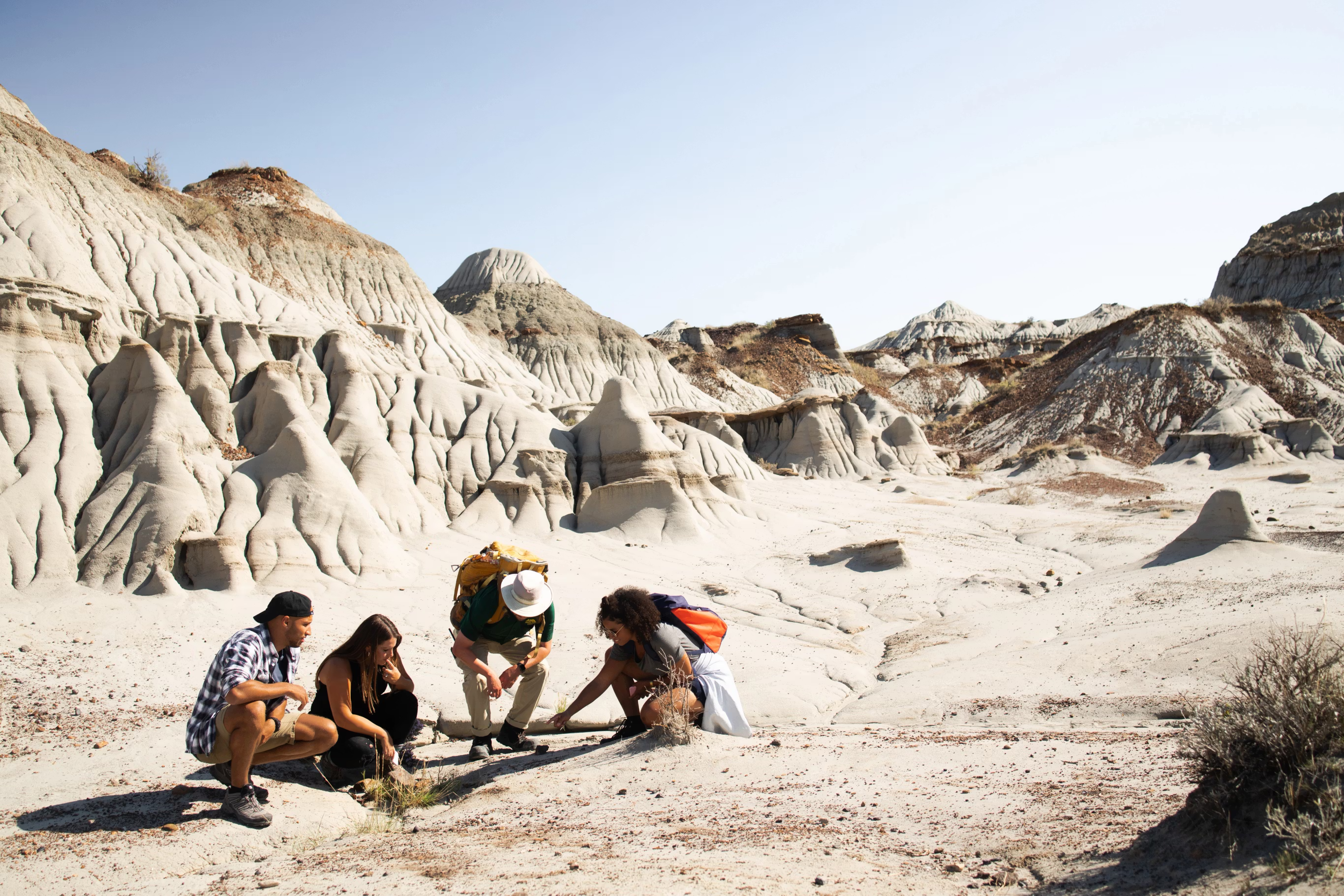
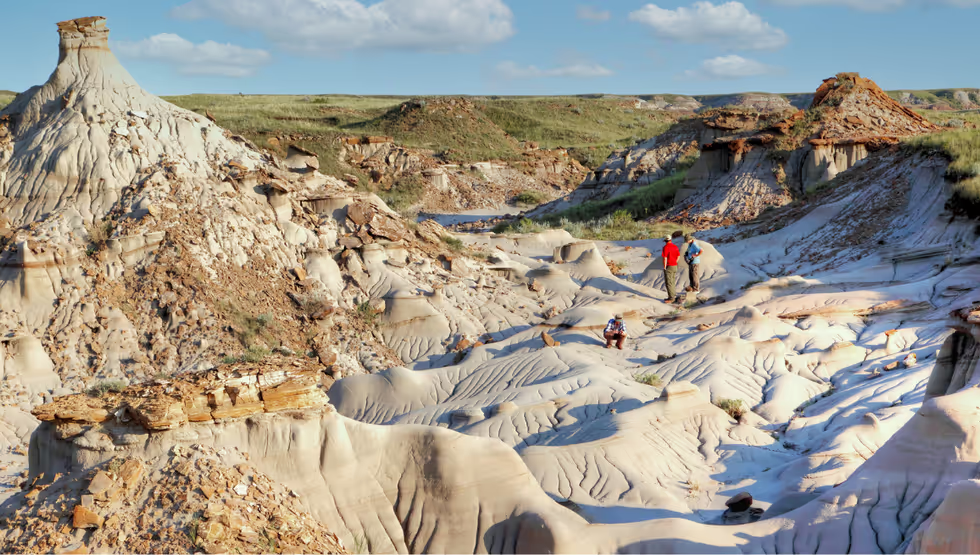
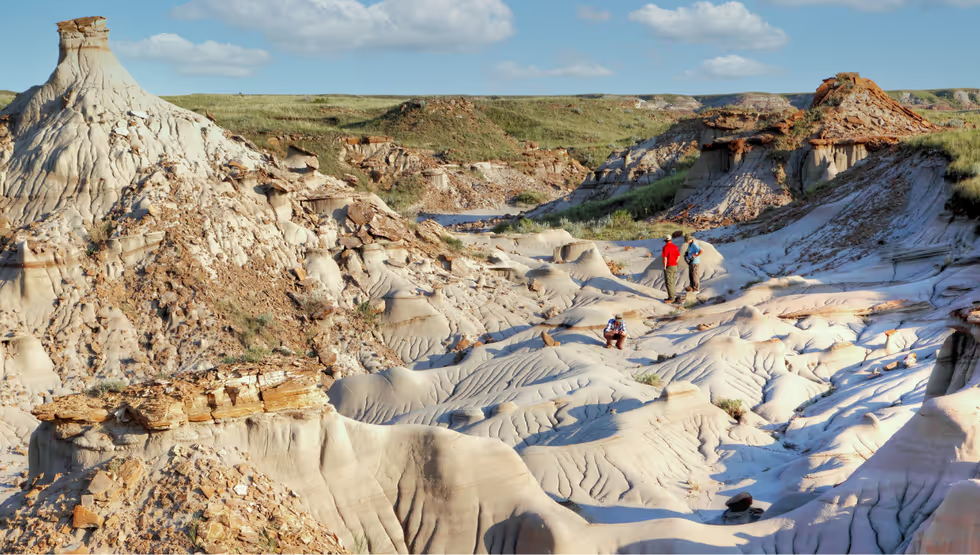
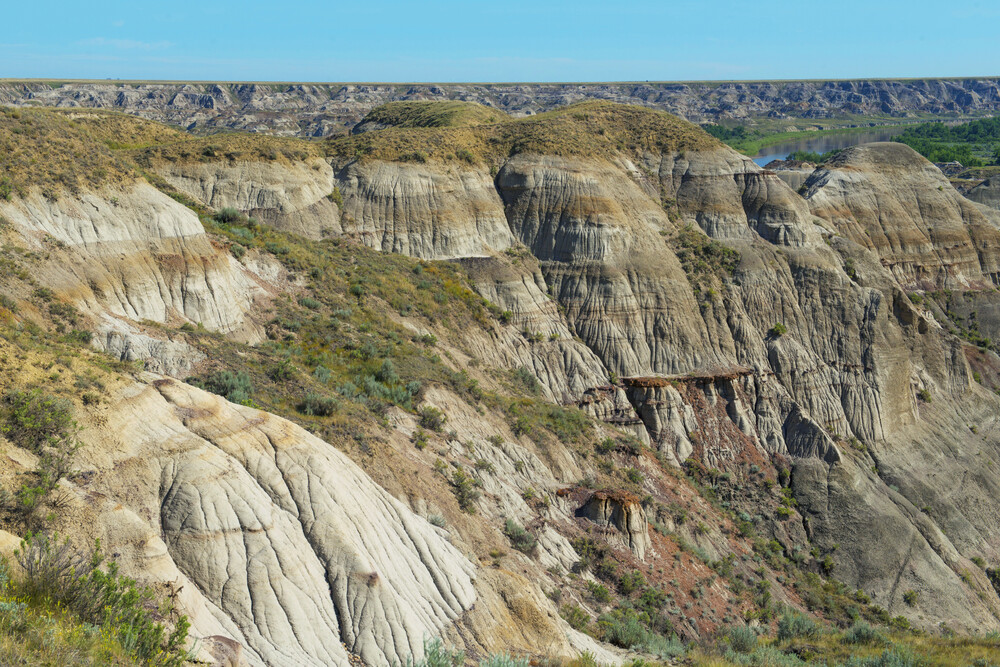
In partnership with our friends at Dinosaur Trips. Dinosaur Provincial Park is one of the richest fossil sites on the planet. Over 75 million years ago, when this whole region was an inland sea, dinosaurs died in river channels and were buried in layers of sand and mud. Today, those layers have eroded away to reveal some of the most extraordinary badlands in North America: towering hoodoos, sculpted coulees, and otherworldly terrain that makes you feel like you've landed on another planet. More than 300 complete dinosaur skeletons have been pulled from this valley. Museums around the world display them. You'll walk where paleontologists still uncover bones from the Late Cretaceous period.

How It Works: Three Parts

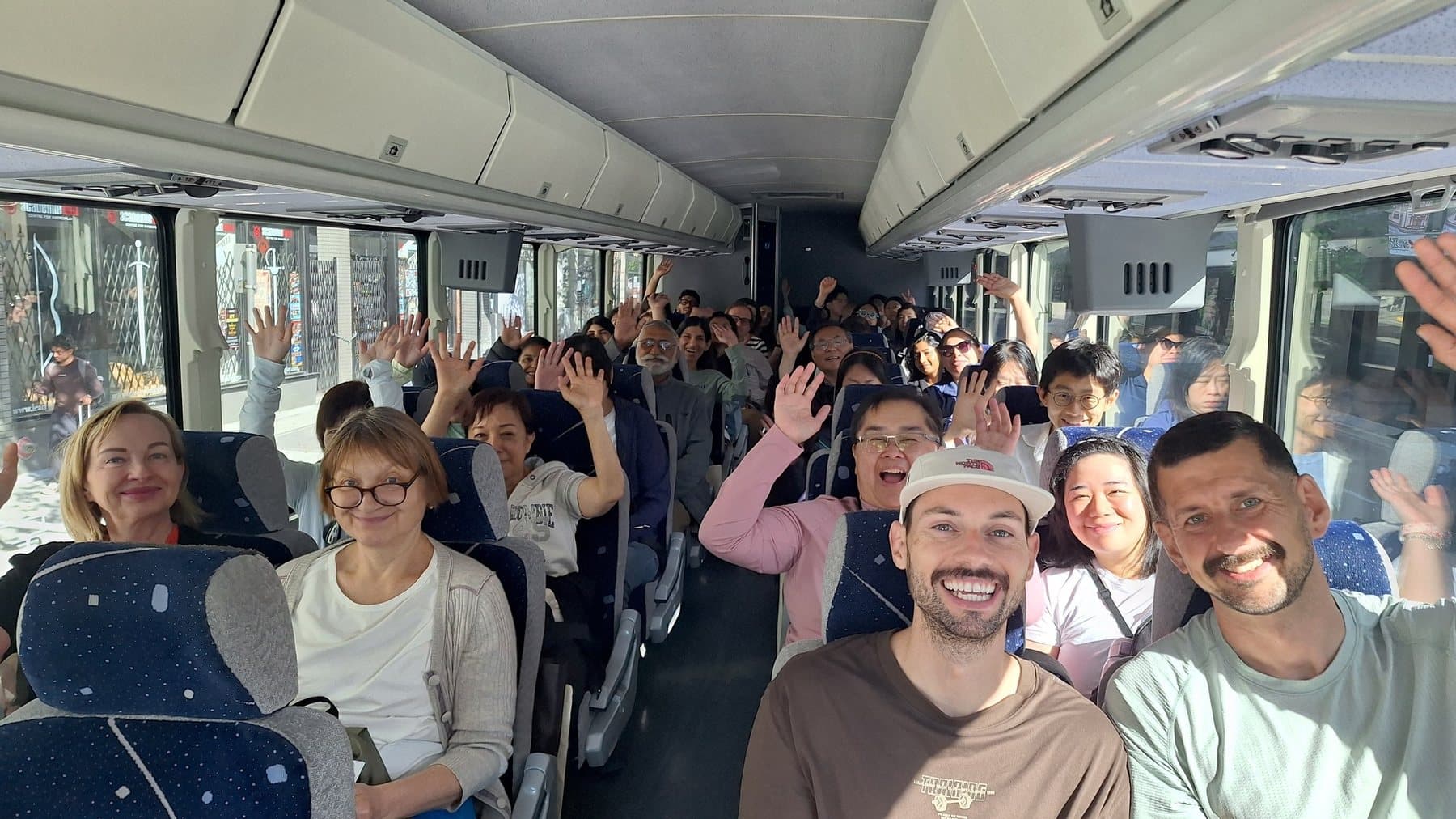
Parkbus handles the two-hour drive from Calgary. You sit back in a comfortable, air-conditioned coach while the prairies transform into badlands. We get you there and back, logistics handled.

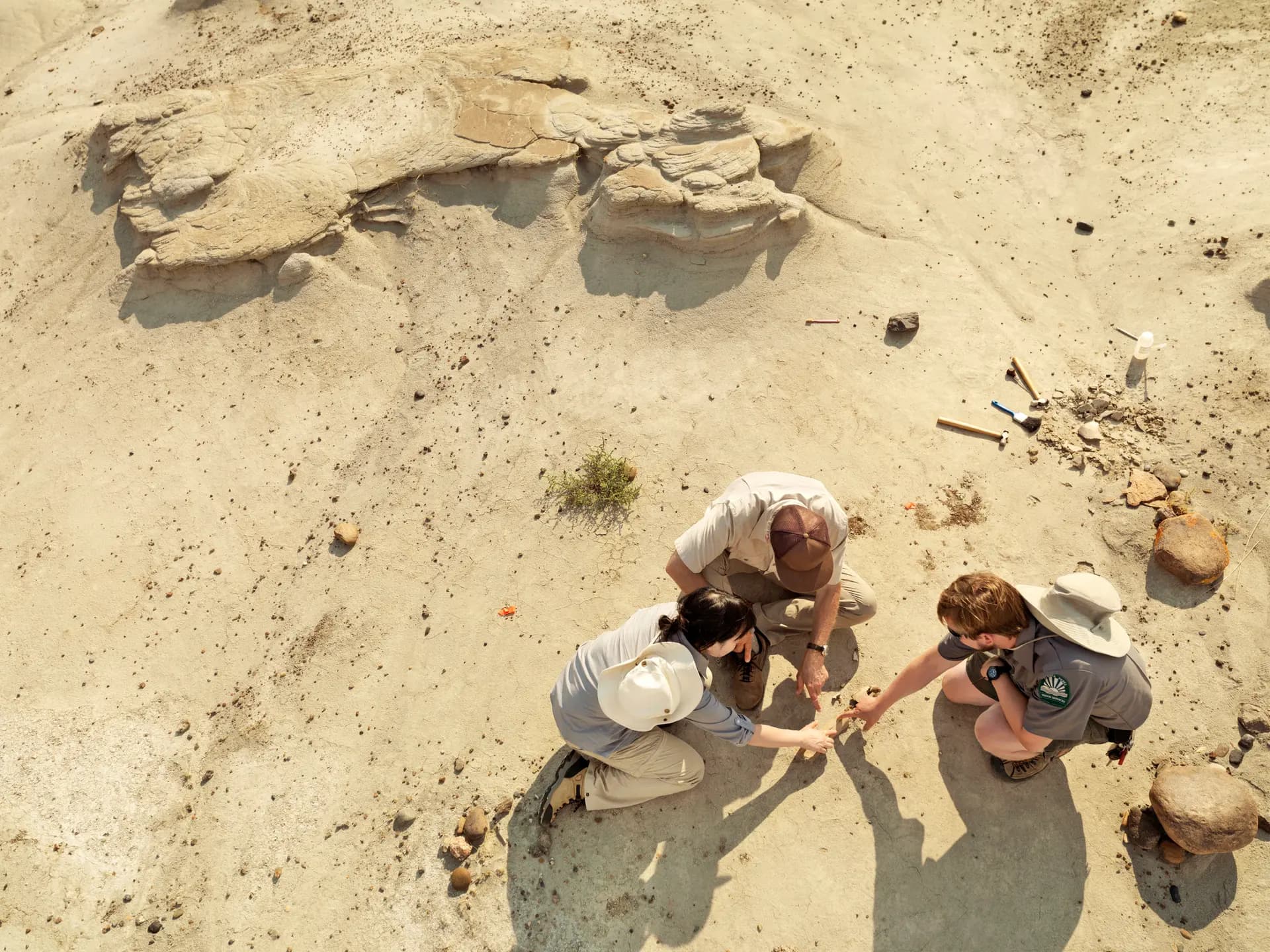
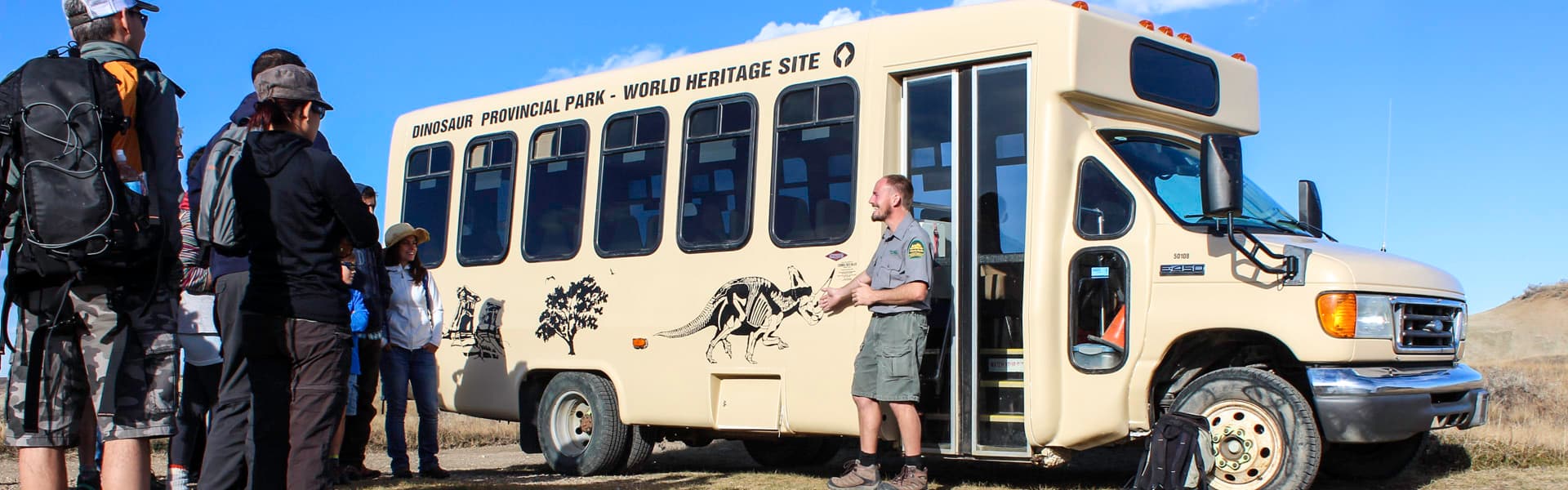
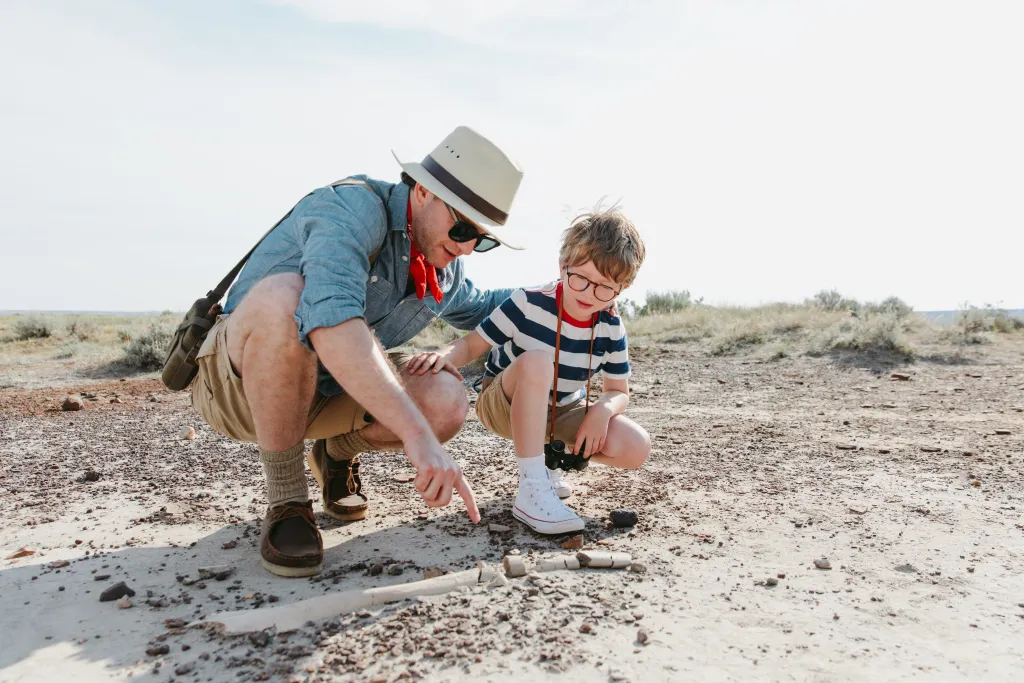
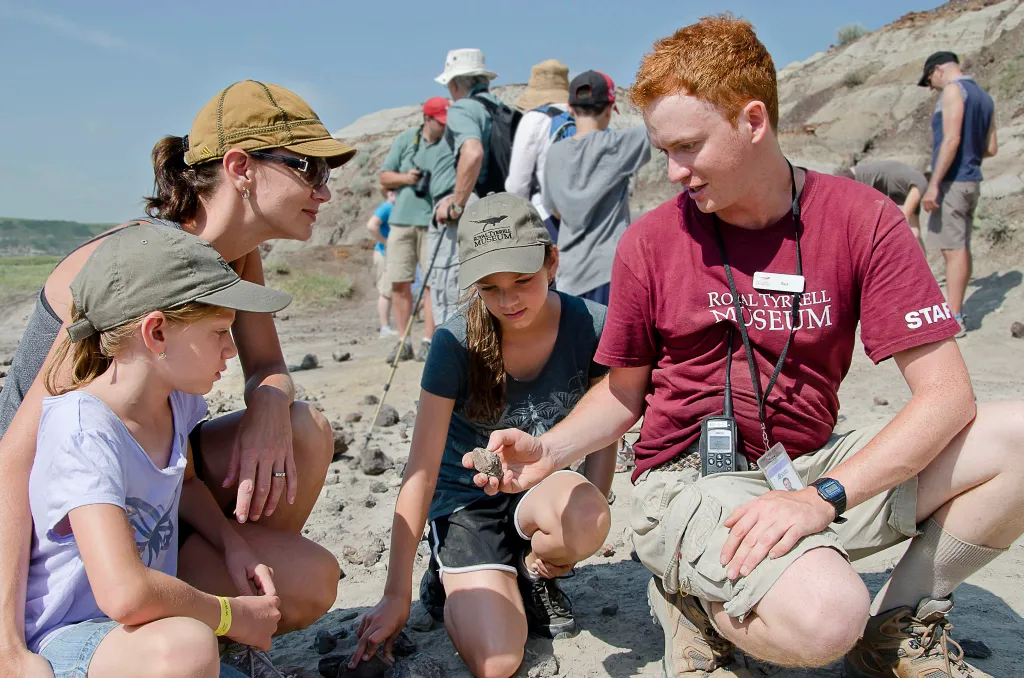
Once you arrive, you'll join the Explorers Bus Tour, a unique park-guided experience led by Parks Alberta interpreters. This is where the magic happens. You'll board a bus deep into the Natural Preserve (the 80% of the park most visitors never see) and stop four times to get out and explore real fossils still emerging from the ground. You'll touch dinosaur bones that have been buried for 75 million years. You'll hear stories about the Blackfoot nation, early fossil hunters, and modern paleontologists who made discoveries in this exact landscape. You might place a protective casting on a fossil, just like real field paleontologists do. This tour is approximately two hours and takes you into restricted areas that you can only access with a guide.

After the Explorers Bus Tour ends, the park becomes yours to explore at your own pace. Hike the Badlands Interpretive Trail (1.3 km, easy, packed with interpretive panels). Follow the Trail of the Fossil Hunters (0.9 km) and keep your eyes down for bone fragments. Climb the hoodoos yourself. Explore the coulees. Scramble through terrain that really does feel Martian. Visit the Visitor Centre with its interactive exhibits and theatre. Grab cold drinks at the Cretaceous Café. You'll have several hours of free time to explore whatever calls to you.

The heat will be real (it's one of Alberta's warmest, driest regions in midsummer), but that's part of the deal. The badlands look even more dramatic in harsh light.

Your People, Your Pace

This trip draws a mix. Solo travellers who want to step out of their routine and into something strange and ancient. Friends looking for a shared memory that feels genuinely adventurous without requiring technical skills or overnight camping. Families with curious kids. Couples who want a day of low-pressure exploration. It doesn't matter if you're traveling alone, with a friend, or dragging along someone who claims they're "not a nature person". Strangers who board the bus together in Calgary often find themselves pointing out the same fossils by afternoon, trading photos, making plans to grab coffee.

The shared experience of arriving car-free, of moving together through restricted areas that require a guide, of touching something that's been underground for 75 million years. It creates a bond that's different from typical tour groups. You're not just sightseeing. You're part of a small expedition.

In Partnership With Dinosaur Trips

Pickup Locations
No items found.

Dinosaur Provincial Park

Dinosaur Provincial Park is a UNESCO World Heritage Site in Alberta, Canada, renowned for its stunning badlands and rich dinosaur fossil discoveries.

Estimated arrival
10:00 AM
Departure
10:00 AM

About the Coach Bus

You're not cramped in a minivan. The Parkbus coach is a high-quality, full-size bus with air conditioning, comfortable seating, and large windows so you can watch the prairies transform into badlands without missing a moment. Plenty of storage for your gear. It's comfortable enough that many people nap on the way back (don't worry, you won't miss anything—the good stuff happens at the park).

Trip Basics & Logistics

Q: What's the pickup point and timing?

A: We depart Calgary early morning (exact time confirmed with your booking). The bus drive to Dinosaur Provincial Park takes approximately two hours. We return to Calgary late afternoon. It's a full day, but you're sitting down the whole drive, so pace yourself on the hikes.

Q: Is this a day trip only, or can I stay overnight in the park?

A: This Parkbus trip is a day trip. You'll return to Calgary the same day. The park does have a campground if you want to extend your stay separately.

Q: How far is Dinosaur Provincial Park from Calgary?

A: About 220 kilometres east, near Brooks. Two hours of drive time gets you there. The distance is why Parkbus exists: it removes the hassle of navigating the highway yourself.

Q: What's included in my ticket?

A: Round-trip transportation from Calgary on our coach bus and the Explorers Bus Tour into the protected Palaeontological Preserve. You get a guided experience with access to restricted fossil areas and off-bus stops to view formations and fossils up close. The guide is a Parks Alberta interpreter who knows the geology, paleontology, and human history of the site.

Q: What's not included?

A: Meals, snacks, and additional activities beyond the bus tour (though hiking trails are free). The Visitor Centre admission and café are separate if you want to visit. Some guided hikes beyond the bus tour can be booked on-site separately.

The Explorers Bus Tour Itself

Q: How long is the guided bus tour?

A: Approximately two hours. You'll be on and off the bus about four times to view significant fossils, formations, and landscapes.

Q: Will I actually see real fossils, or is this just scenery?

A: Real fossils. The guided tour takes you to areas where fossils are still eroding out of the ground. You'll have the chance to see—and touch—real dinosaur bones discovered in the field. You might place a protective casting on a fossil, exactly like paleontologists do in the field. To protect the sites, digging isn't permitted, but the experience of standing where a Centrosaurus or Hadrosaur once roamed is unforgettable.

Q: What will the guide tell us?

A: Your guide will share stories about the people who explored this landscape: the Blackfoot nation (who called the hoodoos matapiiski, meaning "the people"), early fossil hunters from the 1880s onward, and modern paleontologists. You'll learn about the geology, how the badlands formed, why this area has so many dinosaur fossils, and what species you're looking at. It's part history, part geology, part paleontology, part storytelling.

Q: Is the bus tour accessible for people with mobility challenges?

A: Unfortunately, the guided bus tour isn't suitable for wheelchairs or strollers due to the terrain. However, the Visitor Centre and some paved areas of the park are accessible.

Q: Can kids come on the bus tour?

A: Absolutely. Children of all ages are welcome on the guided tour (infants included), though kids under 14 must be accompanied by a paying adult. Fair warning: your dinosaur-obsessed child may never want to leave.

Q: Do I need any prior experience or special fitness level?

A: Not at all. The Explorer's Bus Tour is designed for all ages and abilities. You'll travel by comfortable bus into the preserve with short stops to view fossils and scenery. If you'd prefer more adventure, the park also offers hiking options you can explore on your own during free time.

Q: Will I get bored if I'm not interested in dinosaurs specifically?

A: You might be surprised. Even people who think they don't care about paleontology get absorbed. The landscape itself is genuinely spectacular. The hoodoos and erosion patterns are geological art. The stories about the people who explored here add layers of human interest. And there's something primal about standing in a landscape where you can literally see 75 million years of geological time on display. That part speaks to everyone.

After the Bus Tour: Hiking & Free Time

Q: What can I do after the bus tour?

A: Plenty! The park has five self-guided hiking trails, outdoor fossil displays along the scenic loop road, and a Visitor Centre with interactive exhibits and a theatre. You can scramble on hoodoos, explore coulees, and photograph some of the most dramatic scenery in Canada. After the guided tour, the day is yours. Hike the Badlands Interpretive Trail (1.3 km, easy, packed with interpretive panels about the landscape's geology and human history). Follow the Trail of the Fossil Hunters (0.9 km) and keep your eyes down for bone fragments. Climb the hoodoos themselves. Explore the coulees. Scramble through terrain that really does feel Martian.

Q: How long will I want to stay after the bus tour?

A: Three to four hours minimum if you're doing any hiking. Less if you want to grab a coffee and walk the Badlands Trail. More if you're climbing hoodoos or doing multiple trails. We'll coordinate a return departure time that gives everyone enough free time but gets you back to Calgary at a reasonable hour.

Q: Are there any other guided experiences I can add?

A: Yes. The park offers additional guided hikes (Great Badlands Hike, Centrosaurus Bonebed Hike, and others) that take you even deeper into the preserve. These can be booked separately on-site. There's also a Fossil Safari program and hands-on fossil casting classes. These book up quickly in summer, so check availability when you arrive.

Q: Can I bring my own hiking gear?

A: You don't need specialized gear. Closed-toe, sturdy walking shoes are required (no sandals, flip-flops, or Crocs). Hiking boots or solid running shoes are preferred. Participants without appropriate footwear will not be able to attend the program. Wear light clothing (the park is hot and exposed), bring a hat and sunglasses, and layer for the bus ride back (air conditioning). Poles aren't necessary for these trails but some people like them.

What to Pack & Prepare

Q: What should I wear and bring?

A: Closed-toe, sturdy walking shoes are required (no sandals, flip-flops, or Crocs). Hiking boots or solid running shoes are preferred. The badlands can be hot and exposed, so bring a hat, sunscreen, and plenty of water. There's no shade out there, so dress for the weather and prepare to be impressed. Layers are also recommended. Please note that weather in June in Alberta can be variable, so checking the weather in advance of arrival and preparing accordingly is recommended. You'll also want insect repellent with DEET. A camera or phone for photos is essential.

Q: Is there a café or place to buy food at the park?

A: The Cretaceous Café operates seasonally (May to mid-October) and offers snacks and light meals. Outside that window, pack your own lunch and snacks. The Visitor Centre also has a gift shop if you want to bring home a souvenir.

Q: How hot does it get?

A: Midsummer highs in the area reach 25-30°C (sometimes hotter on blazing days). The badlands have almost zero shade, so it feels hotter. Bring tons of water. The heat is part of the experience—the landscape looks more dramatic in harsh light—but it's real. Weather in June in Alberta can be variable, so checking the forecast in advance and dressing in layers is recommended.

Q: What if the weather turns bad?

A: The park may cancel guided tours during extreme weather, including heavy rain or excessive heat. If conditions are questionable, check with Parkbus or the park before departure. We recommend checking the forecast and dressing in layers. In the event of rain, wet conditions, unsafe road conditions, or other conditions that threaten the safety and comfort of participants, we may not be able to deliver this program in its planned format. In such a circumstance, we will do our very best to offer your group an alternate program, but this cannot be guaranteed.

Solo Travellers & Community

Q: I'm travelling solo. Will I feel out of place?

A: No. Solo travellers are regular on Parkbus trips. You'll share the bus with a mix of people, and the guided tour creates natural conversation points (everyone's looking at the same fossils, asking the same questions). By the end of the day, you'll likely have chatted with someone interesting. The Facebook group before the trip helps too—you can introduce yourself and meet fellow travellers before you board.

Q: How does the Parkbus community work?

A: Before your trip, join the Parkbus ActiveDays Facebook group (we'll send you the link). It's where travellers ask practical questions (What should I wear? How much water do I really need?), share excitement, and meet each other. Some people exchange contact info and stay in touch after the trip. It transforms the experience from "I'm taking a tour" to "I'm part of a group of people who chose to spend the day exploring something extraordinary together."

The Park Itself: What You're Actually Seeing

Q: Why is Dinosaur Provincial Park a UNESCO World Heritage Site?

A: It's recognized for three reasons: (1) It contains the greatest concentration of Late Cretaceous dinosaur fossils on Earth. More than 300 complete skeletons have been removed since the 1880s, and museums in 30 cities around the world display them. (2) The badlands themselves are a geological masterpiece, carved by the Red Deer River over 13,000 years (since the last Ice Age). The erosion patterns and hoodoos are visually and scientifically stunning. (3) The ecosystem is unique: prairie grasslands at the rim, badlands in the valley, cottonwood riparian forests along the river. It's three distinct habitats in one protected area.

Q: What dinosaurs lived here?

A: About 58 different species have been discovered, ranging from massive carnivores like Albertosaurus to herds of Centrosaurus (a horned dinosaur similar to Triceratops). Your guide will point out what you're seeing and tell stories about these animals. The fossils you see are from about 75 million years ago, during the Late Cretaceous period.

Q: How do I know if I'm looking at a real fossil?

A: Your guide will point them out. There's an old trick: lick your finger and touch it to the rock. If it sticks slightly (because fossils are porous), it's a fossil. If it slides off smoothly, it's just rock. Kids love this test. Fair warning: the guide probably has a reputation for this and will absolutely make you do it.

Q: Why is this place so dry?

A: Dinosaur Provincial Park is in the Dry Mixedgrass Subregion, Alberta's warmest and driest area. Permanent streams are rare. The landscape is adapted to low moisture: prairie grasses dominate above, and cacti, sage, and greasewood survive in the badlands. It creates that austere, almost alien feeling.

Q: What's the deal with the Blackfoot connection?

A: The Blackfoot nation (Siksika) are the traditional territory holders and sacred homeland keepers of this land. They were the first to discover dinosaur bones and respectfully left them undisturbed. They called the hoodoos matapiiski, meaning "the people," believing them to be spirits that watch over the land. Early Blackfoot camps were set up on the grassland rim above the coulees, not within them, possibly out of spiritual respect. Your guide will share these stories and their significance.

Q: What's a hoodoo?

A: Hoodoos are tall, thin rock formations created by selective erosion. Softer sandstone erodes faster than harder ironstone layers above, creating these spire-like shapes over millions of years. They're sculptural and unsettling in the best way. You'll see dozens of them from the bus and hikes.

No items found.

Book Now