Perseids at Point Pelee: Watch the Year's Best Meteor Shower from Canada's Southernmost Dark Sky Preserve
August 11-12: The Night the Sky Puts on a Show
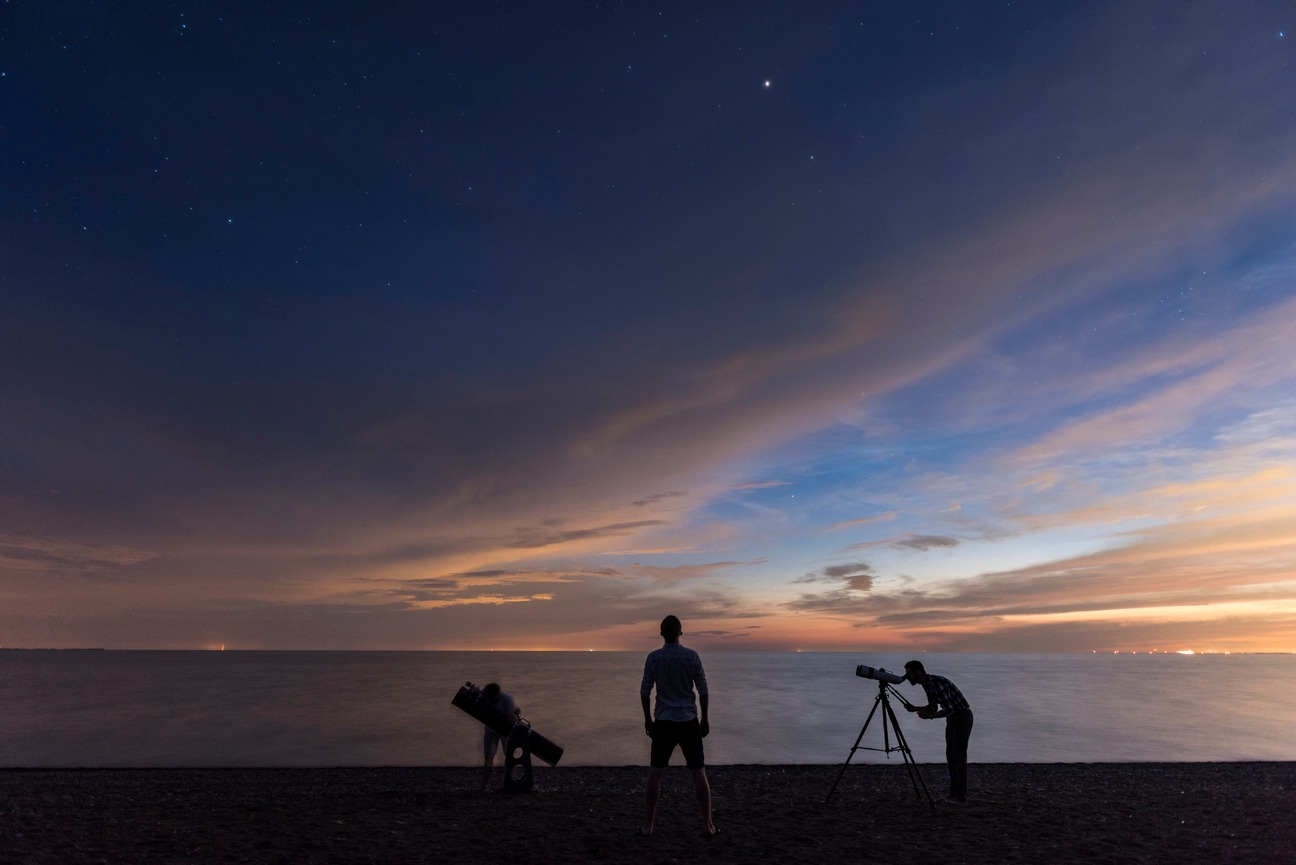
On the night of August 12, 2026, the Perseids meteor shower hits its peak. This is the most popular meteor shower of the year, famous for producing bright, fast-moving shooting stars that streak across the sky at rates of 60 to 100 per hour. And this year, the conditions are almost unreasonably perfect: the moon is new on August 12, which means the sky will be as dark as it gets. No moonlight. No interference. Just meteors.
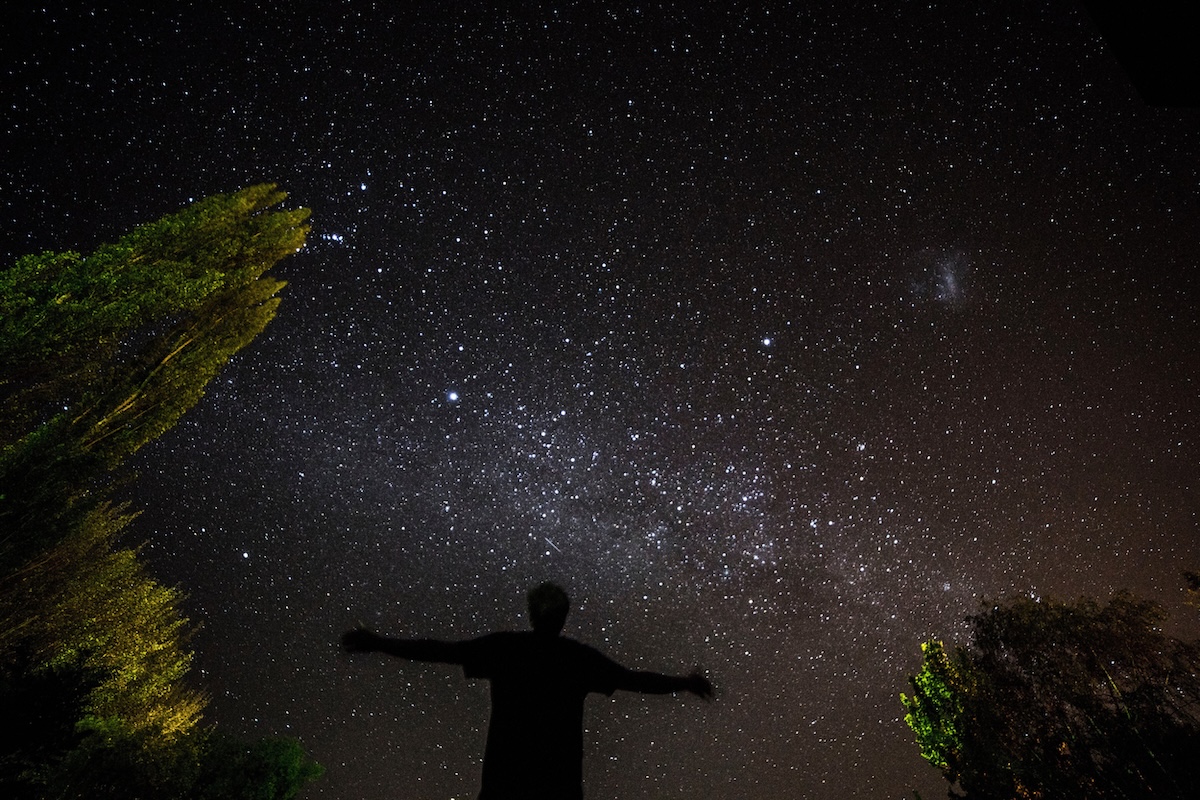
Now here's the part that matters. You could watch the Perseids from a Toronto rooftop and see maybe a handful through the light pollution. Or you could watch them from Canada's first designated Dark Sky Preserve, lying on a beach at the southernmost point of mainland Canada, where millions of stars are visible to the naked eye on a regular Tuesday. That's Point Pelee National Park. And on August 11-12, that's where Parkbus is taking you.
You're Farther South Than You Think
Point Pelee sits at the same latitude as Rome, Barcelona, and Northern California. That fact alone tends to stop people mid-scroll. This is mainland Canada's southernmost point, a slender peninsula of sand and ancient forest that juts out into Lake Erie like a compass needle pointing toward the tropics. And for one night, during the peak of the best meteor shower of 2026, you're going to sleep inside it.
The Carolinian Forest: Cactus, Wild Grape Vines, and 390 Species of Birds
The Carolinian forest at Point Pelee is unlike anything else in Ontario. This isn't the boreal shield you see up in Muskoka or Algonquin. Hackberry, sassafras, black walnut, and tulip trees form a dense canopy that feels more Appalachian than Canadian. Wild grape and Virginia creeper vines drape from the treetops. Prickly pear cactus (yes, cactus) grows on the sandy ridges. The park is home to over 750 native plant species and more species at risk than any other national park in the country. In summer, the forest floor hums with the sounds of tree frogs and the rustle of eastern foxsnakes moving through the underbrush. Then there are the birds. Over 390 species have been recorded here, more than almost anywhere else in North America. Point Pelee sits at the crossroads of two major migration flyways, which means everything from prothonotary warblers to peregrine falcons passes through on the way north or south. The park was literally created because birdwatchers lobbied for it back in 1918.
Why Most Torontonians Have Never Been to Point Pelee
Here's the thing. Point Pelee is about four hours from Toronto by car. It's in the southwest corner of Ontario, past London, past Chatham, in a part of the province most Torontonians have never visited. There's no train that gets you there. No convenient GO bus. And if you do drive, the oTENTik accommodations inside the park are notoriously hard to book. There are only 24 of them and they sell out within minutes of the reservation window opening. And we saved them for you.
We Handle the Drive & Accomodations
Parkbus handles the drive, the route, and the booking. You handle deciding which snacks to bring. We've secured a block of oTENTiks at Camp Henry for August 11-12, so you don't have to set an alarm for 8 a.m. on reservation day and hope for the best. And we timed it so you'll be sleeping in the park on the night the Perseids peak under a moonless sky. Just grab a seat on the bus and wake up in Canada's most ecologically diverse national park.

Your Guide: Astronomer Caroline El Khoury
Here's what turns a good stargazing night into an unforgettable one: having someone who actually knows what they're looking at standing next to you.
Caroline El Khoury is a University of Toronto-trained astronomer with a degree in Physics and Astronomy. She's conducted pulsar research at ASTRON, the Netherlands Institute for Radio Astronomy, and has spent years turning her love of the night sky into something the rest of us can share. She runs stargazing tours and night sky workshops across Ontario, and her astrophotography and astronomy content have built her a dedicated following online (@nightsky.adventures).
On this trip, Caroline will be your guide to the Perseids. She'll walk you through the constellations, point out planets, explain why the meteors leave those long glowing trails, and help you spot things you'd never notice on your own. If you've ever looked up at a dark sky and thought "I wish I knew what I was seeing," this is your answer. She'll also have tips for anyone who wants to try their hand at astrophotography, from phone cameras to full setups.
It's one thing to lie on a beach and watch meteors streak overhead. It's another thing entirely to do it with an astronomer beside you who can tell you that those bright streaks are tiny grains of debris from Comet Swift-Tuttle, burning up at 59 kilometres per second in the atmosphere about 100 km above your head. The spectacle is the same. The understanding makes it richer.
What's Actually Waiting for You
- Stand at the bottom of the map. Take the shuttle (or bike) to the Tip, the actual southernmost point of mainland Canada, where a narrow sand spit dissolves into Lake Erie. Climb the Tip Tower for a 360-degree view of open water with the faint suggestion of Ohio on the horizon. It's a strange and beautiful feeling, knowing that every direction except south is Canada.
- Walk through a forest that feels tropical. The Woodland Nature Trail and DeLaurier Trail wind through old-growth Carolinian forest where the canopy is so thick that summer light barely reaches the ground. Keep your eyes low for painted turtles and wild turkeys, which wander the campground paths with zero concern for human schedules.
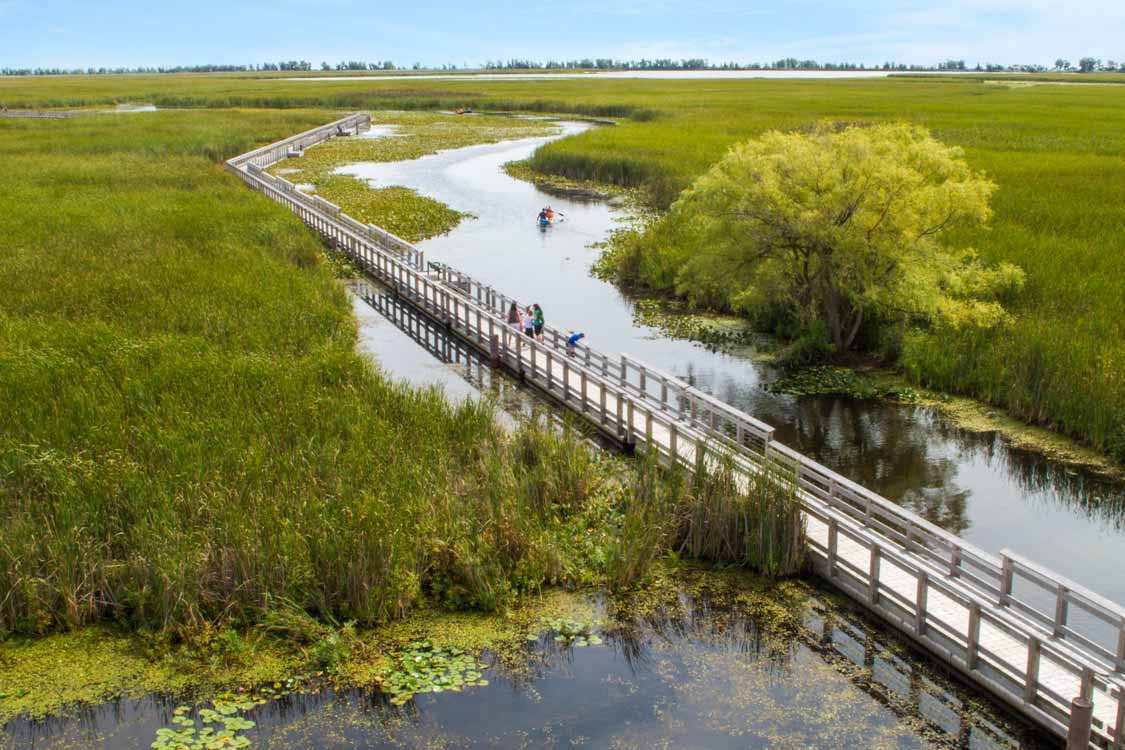
- Paddle a freshwater marsh older than the country. Rent a canoe or kayak from Pelee Wings at the Marsh Boardwalk (first come, first served) and explore the park's interior wetlands, where the water is calm, the birdlife is extraordinary, and the loudest sound is your own paddle. You can also book a spot on Parks Canada's guided Freighter Canoe Tour, a ten-person canoe led by an interpreter who'll introduce you to carnivorous plants, basking turtles, and the occasional beaver. Tours run on weekends and can be reserved by calling 519-322-2365 ext. 0. No paddling experience required.
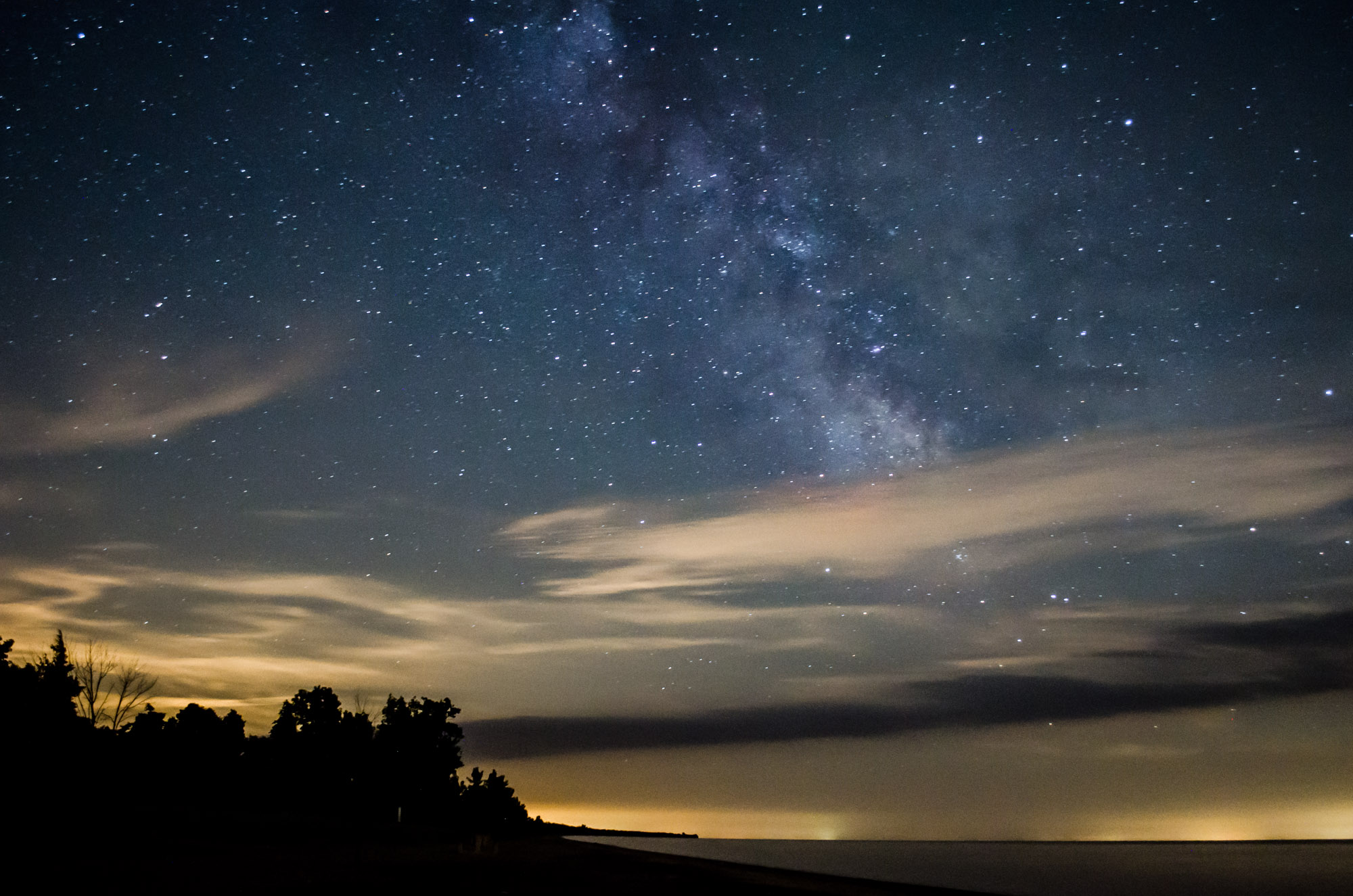
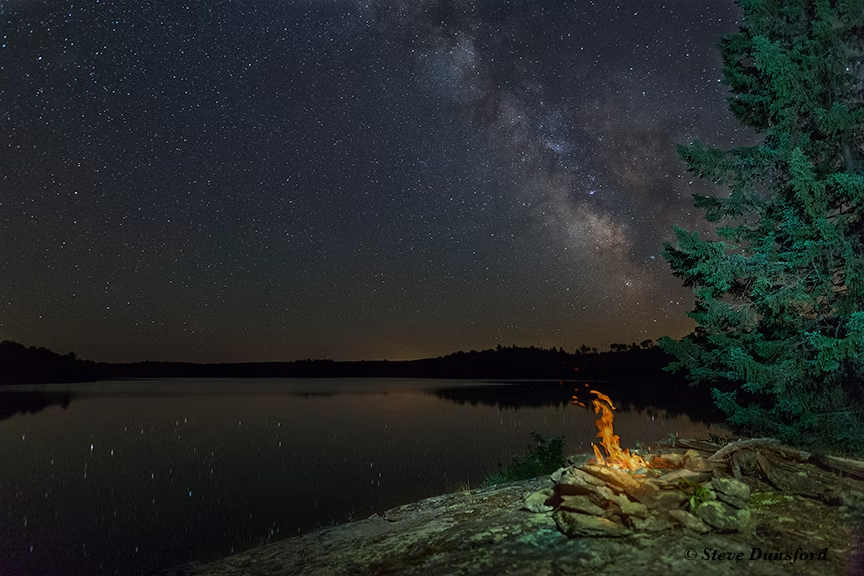
- Watch the Perseids tear the sky apart. This is the whole reason for the timing. Point Pelee was designated a Dark Sky Preserve in 2006, the first national park in Canada to receive the honour. On a regular clear night, millions of stars are visible and the Milky Way stretches overhead like a bright, chalky band. On the night of August 12, with the new moon keeping the sky pitch black, you'll be watching one of the year's most spectacular celestial events from one of the darkest places in southern Ontario. The Perseids produce bright, colourful meteors that frequently leave long, glowing trails. At peak, you can expect to see a shooting star every minute or so. West Beach is the prime viewing spot. Bring a blanket, lie flat on the sand, and let your eyes adjust for about 20 minutes. What happens next is the kind of thing that's legitimately hard to describe to someone who has only ever looked up from a city. The best viewing is after midnight into the pre-dawn hours, so the fact that you're sleeping in the park (and not driving home) is the whole point.
- Sleep in a real bed. In a national park. With electricity. More on the oTENTiks below, but the short version: you get a mattress, a roof, a barbecue, Muskoka chairs, and a fire pit. The long version is even better.
Sleep in a Real Bed in a National Park (With Electricity)
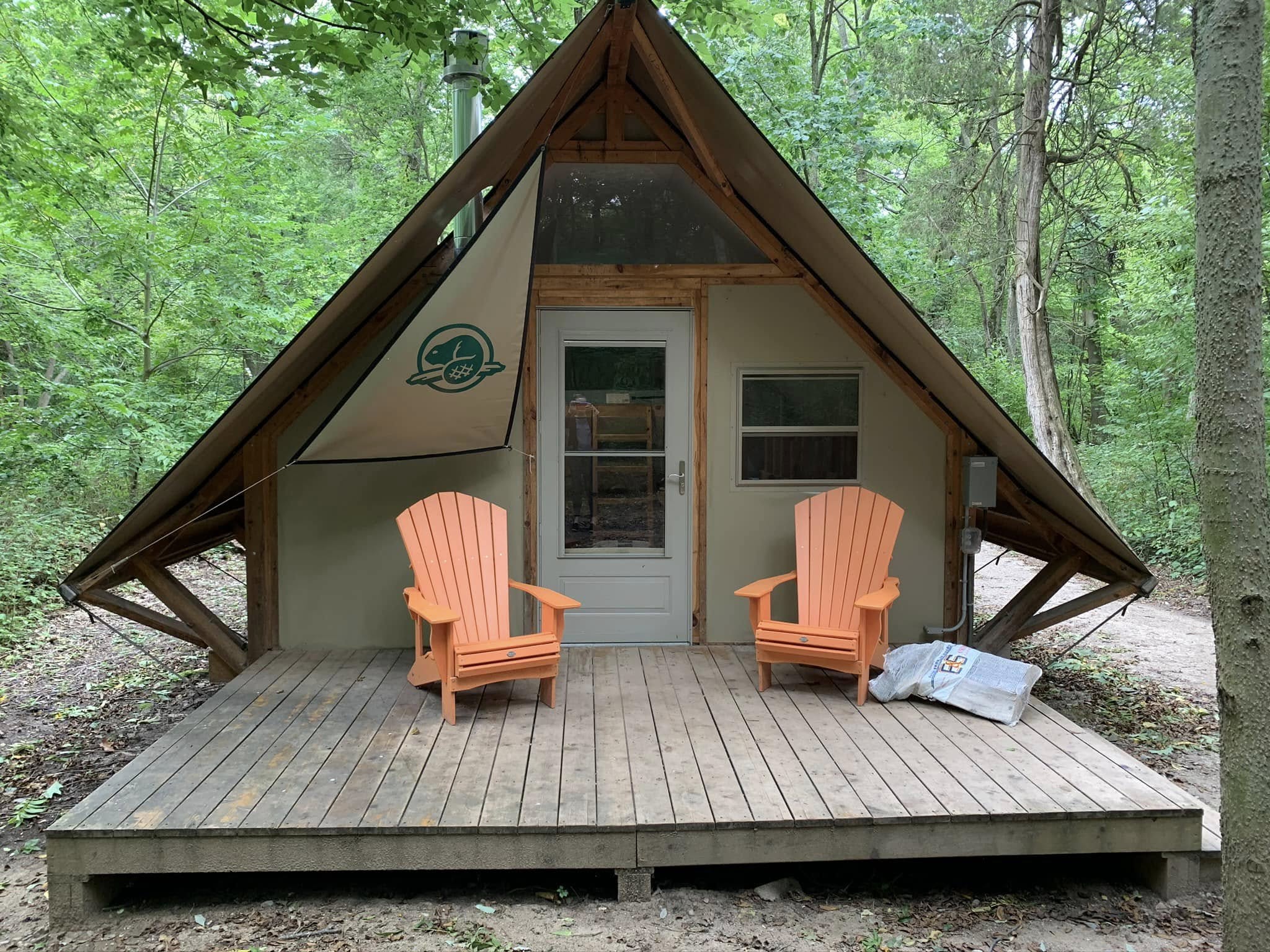
An oTENTik is Parks Canada's answer to the question, "What if camping were actually comfortable?" It's a cross between an A-frame cabin and a prospector tent, built on a raised wooden platform with a proper door and a locking latch. Each one sleeps up to six people on high-density foam mattresses: four on the lower level (two queen-size beds) and two more in the upper loft (one double). Inside, you'll find a table, chairs, an overhead light, and electrical outlets. The oTENTiks at Point Pelee also come stocked with cookware, plates, cutlery, pots, and pans, which is unusual and genuinely appreciated.
Outside, each site has a gas barbecue, a picnic table, two Muskoka chairs, a wildlife-proof food locker, and a fire pit. The Camp Henry comfort stations (a short walk away) have flush toilets, showers, and a dishwashing station. There's a camp office that sells firewood, snacks, and Parks Canada merchandise.
So you get the experience of sleeping in the forest, surrounded by the sounds of the Carolinian canopy and the distant wash of Lake Erie. But you also get a mattress. And a barbecue. And a door that closes. It's the best of both worlds for people who love nature but also love not sleeping on a root.
Solo, With Friends, or Somewhere in Between
This is a trip built for groups. Each oTENTik sleeps six, which means the more friends you bring, the less each person pays. Rally your crew, fill a cabin, and split the cost. It turns a park weekend into something closer to a cottage weekend, but with a dark sky overhead and a national park as your backyard.
If you're booking solo, that's equally welcome. Parkbus trips attract a disproportionate number of independent adventurers, and this one is no different. Solo travellers will be matched with same-sex cabin mates, so you'll share an oTENTik with other people who showed up alone and are ready to make friends over a campfire. It doesn't matter if you're coming with your best friend, a group of six who've been planning this for months, or by yourself on a Tuesday impulse decision. Everyone ends up around the same fire pit.
There's something specific about arriving at a place together, by bus, without the stress of driving. No one's exhausted from navigating the 401. No one's arguing about directions. Everyone steps off at the same time, in the same mood: ready. That shared arrival creates a kind of instant camaraderie that's hard to manufacture any other way. And then you all end up on a beach at midnight watching meteors together. That's the kind of night people talk about for a long time.
Meet Your Crew Before the Bus Leaves
We'd recommend joining the ActiveDays Facebook group before the trip. It's part practical (ask about gear, find out what your guide recommends, coordinate food for shared barbecues) and part social (put faces to names, find someone to split an oTENTik with, get excited together). Some of our best trip stories started with a comment in the group days before departure.
Pickup Locations
Getting There
When is this trip?
August 11-12, 2026. You'll arrive on August 11 and depart August 12. This timing puts you at Point Pelee during the peak of the Perseids meteor shower, with a new moon on August 12 providing the darkest possible skies.
Where does the bus depart from?
The bus departs from Toronto. Exact pickup locations and times will be confirmed in your booking details.
How long is the drive?
Point Pelee National Park is approximately 4 to 4.5 hours from Toronto. You'll be on a comfortable coach bus with air conditioning, reclining seats, and big windows for the drive through southwestern Ontario. Sit back, read a book, nap, or get to know your seatmate.
Do I need a car once I'm there?
No. The park is compact (15 square kilometres) and very walkable. There's a free shuttle that runs from the Visitor Centre to the Tip from mid-April through October, plus over 12 km of trails and a 9 km roadway for cycling. Everything you need is accessible on foot or by bike.
Accommodation
What exactly is an oTENTik?
An oTENTik is a Parks Canada accommodation that's a cross between a cabin and a canvas tent. It sits on a raised wooden platform, has a proper door, and sleeps up to six people on foam mattresses. It has electricity, indoor lighting, a table and chairs, and cookware. Outside, each site comes with a gas barbecue, Muskoka chairs, a picnic table, a food storage locker, and a fire pit. It's not quite glamping, but it's a significant step up from a tent on the ground.
How many people does each oTENTik sleep?
Six if you book as a group. 4 if you book solo. There are four mattresses on the lower level (two queen-size beds) and two mattresses in the upper loft (one double bed).
Is there running water in the oTENTik?
No. The oTENTiks do not have plumbing. However, the Camp Henry comfort stations are a short walk away and have flush toilets, hot showers, potable water, and a dishwashing area.
What if I'm coming solo?
Solo travellers are absolutely welcome. You'll be paired with same-sex cabin mates in a shared oTENTik. It's one of the best ways to meet people on the trip.
What if I have a group?
Even better. Get a group of up to six together, book an oTENTik, and split the cost. It makes the trip significantly more affordable and means you get a cabin to yourselves.
Are there accessible oTENTik sites?
Yes. Four oTENTik sites at Camp Henry are accessible (sites 8, 11, 17, and 18), equipped with ramps and wheelchair-friendly picnic tables. Site 11 also has a removable bed for wheelchair transfer. Contact us if you have specific accessibility needs and we'll coordinate with the park.
What to Bring
What's provided in the oTENTik?
Mattresses (but not bedding), cookware, plates, cutlery, pots, pans, a broom, an indoor table and chairs, electricity, and an overhead light. Outside: a gas barbecue, picnic table, Muskoka chairs, a food locker, and a fire pit.
What do I need to bring?
Sleeping bag or blankets, pillow, food and drinks (in a cooler), flashlight or headlamp, bug spray, sunscreen, matches or a lighter, a towel, and a dish cloth. Lawn chairs are a nice bonus for sitting around the fire.
What about food?
Bring your own. There's no restaurant inside the park, but the gas barbecue and fire pit make cooking easy. Leamington (about 10 minutes from the park entrance) has grocery stores if you need to pick up anything on arrival. Remember: all cooking must be done outside, never inside the oTENTik.
The Park
What are the main things to do?
Walk to the Tip (Canada's southernmost mainland point), hike the Marsh Boardwalk, explore the Carolinian forest trails, rent a canoe or kayak from Pelee Wings at the Marsh Boardwalk, cycle the park road, visit the Visitor Centre, book a guided Freighter Canoe Tour (call 519-322-2365 ext. 0), and stargaze after dark with astronomer Caroline El Khoury.
Who is the stargazing guide?
Caroline El Khoury is a University of Toronto-trained astronomer with a degree in Physics and Astronomy. She's conducted research on pulsars at ASTRON in the Netherlands and runs popular stargazing tours and night sky workshops across Ontario. You can check out her work on Instagram at @nightsky.adventures. On this trip, Caroline will lead the group through the Perseids viewing, help you identify constellations and planets, and offer tips for night sky photography.
Do I need my own telescope or binoculars?
No. Caroline will have equipment for the group, and the Perseids are best viewed with the naked eye since the meteors streak across wide swaths of sky. That said, binoculars are great for exploring star clusters and the Milky Way between meteor sightings, so bring them if you have them.
What's the stargazing like?
Exceptional, and this trip is timed for arguably the best night of stargazing in 2026. The Perseids meteor shower peaks on the night of August 12-13, and the moon is new on August 12, meaning zero moonlight interference. Point Pelee was designated a Dark Sky Preserve in 2006, the first Canadian national park to earn that recognition. Under normal conditions, the Milky Way is visible to the naked eye here. During the Perseids, you can expect to see 60 to 100 meteors per hour at peak, with bright, colourful shooting stars that leave long glowing trails. The best viewing is after midnight through the pre-dawn hours. West Beach is the prime spot. Bring binoculars or a small telescope if you have one, and cover your flashlight with red cellophane to preserve your night vision. A blanket or camp chair is essential since you'll want to lie back and look straight up.
Why is August 11-12 such good timing?
Two reasons. First, the Perseids meteor shower peaks on the night of August 12-13, and the shower is already producing strong rates on the nights surrounding the peak. Second, the moon is new on August 12, which means the sky will be as dark as it possibly can be. This combination of peak Perseids and a moonless sky at a certified Dark Sky Preserve is about as good as stargazing conditions get in Ontario.
Are there bugs?
Yes, this is a national park on a wetland peninsula. Mosquitoes and ticks (including black-legged ticks that carry Lyme disease) are present. Bring bug spray and wear long pants. Stable flies can be an issue in late summer, particularly near the Tip. They target exposed ankles and calves, so long pants are your best defence.
Is swimming available?
Point Pelee has 20 km of continuous beach along Lake Erie. Swimming is available at designated beach areas. Check with park staff about conditions, as strong currents and waves can occur.
What about the weather?
Point Pelee has the warmest climate of any national park in Ontario, thanks to its southern location and the moderating effects of Lake Erie. Summer temperatures are warm and sometimes humid. Evenings can cool off, especially near the water. Bring layers.
Is there cell service?
Cell service is generally good in the northern parts of the park but weakens as you move south toward the Tip. Don't count on it everywhere.