Day Trip to Point Pelee National Park

The Same Latitude as Northern California
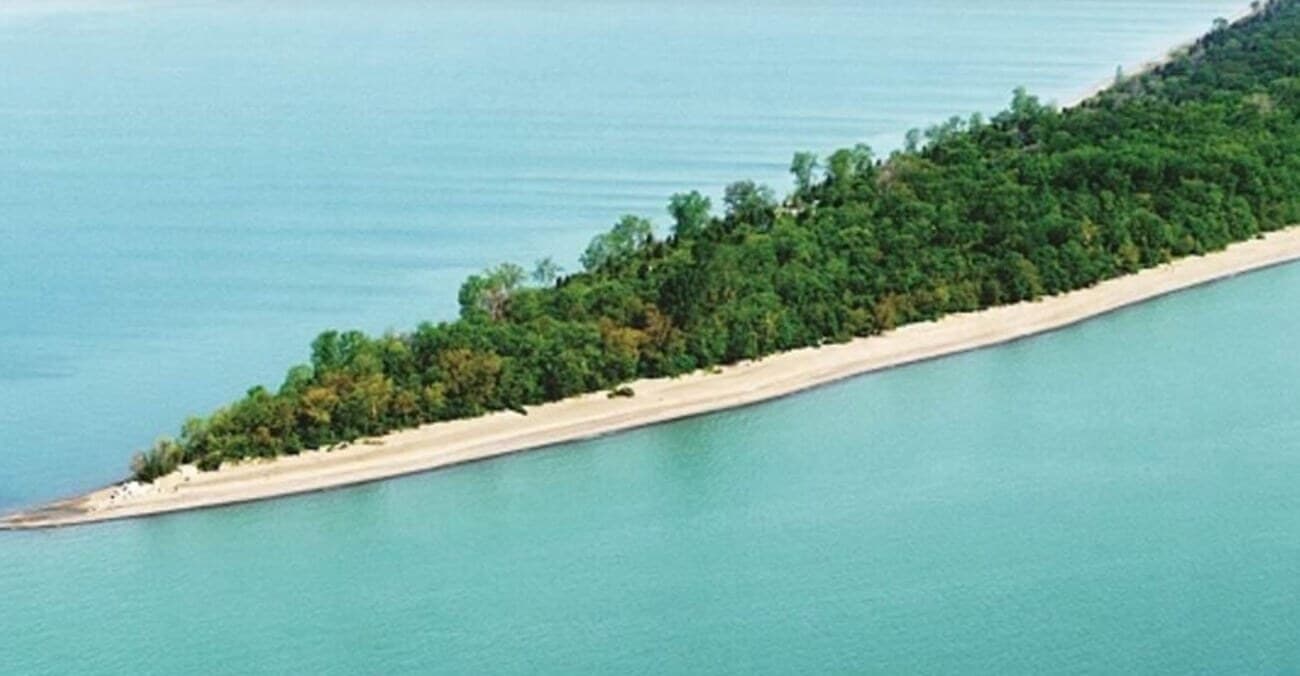
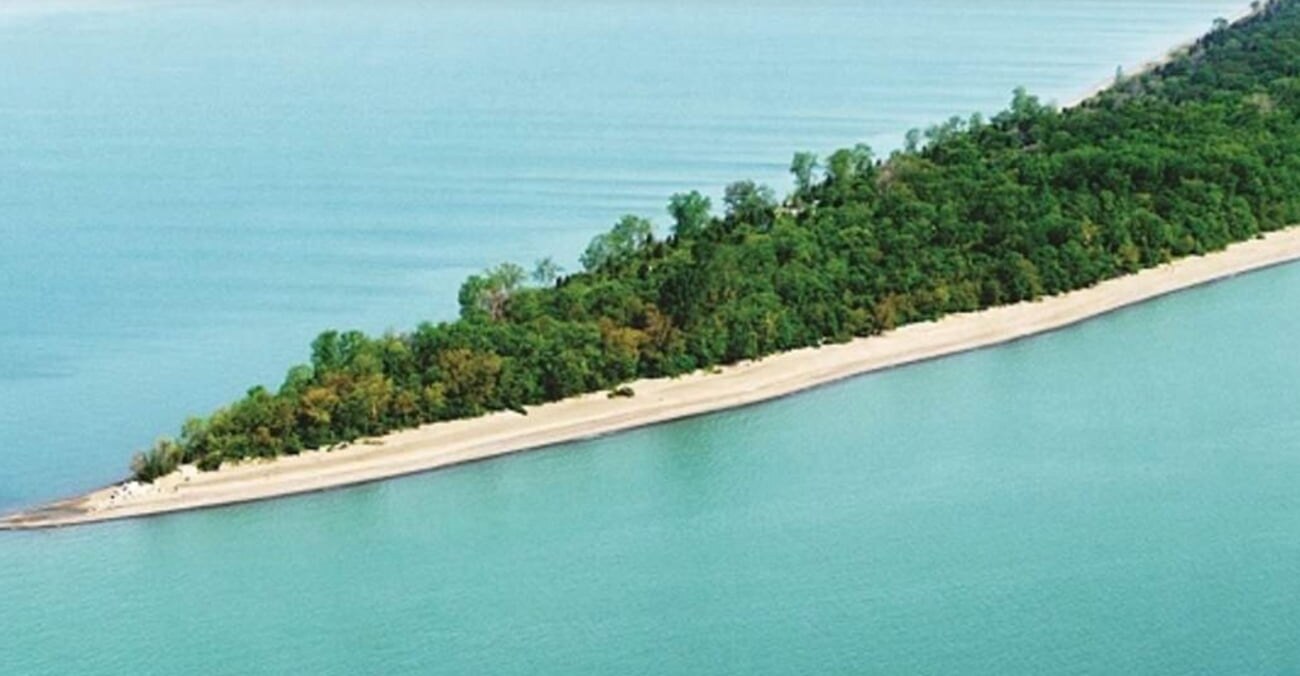
Point Pelee sits further south than most of California's wine country. This narrow sand spit, jutting into Lake Erie like a compass needle, is the southernmost point of mainland Canada, one of the smallest national parks in the country, and one of the most ecologically dense places on the continent.
Carolinian Forest, Freshwater Marsh, and 390 Bird Species
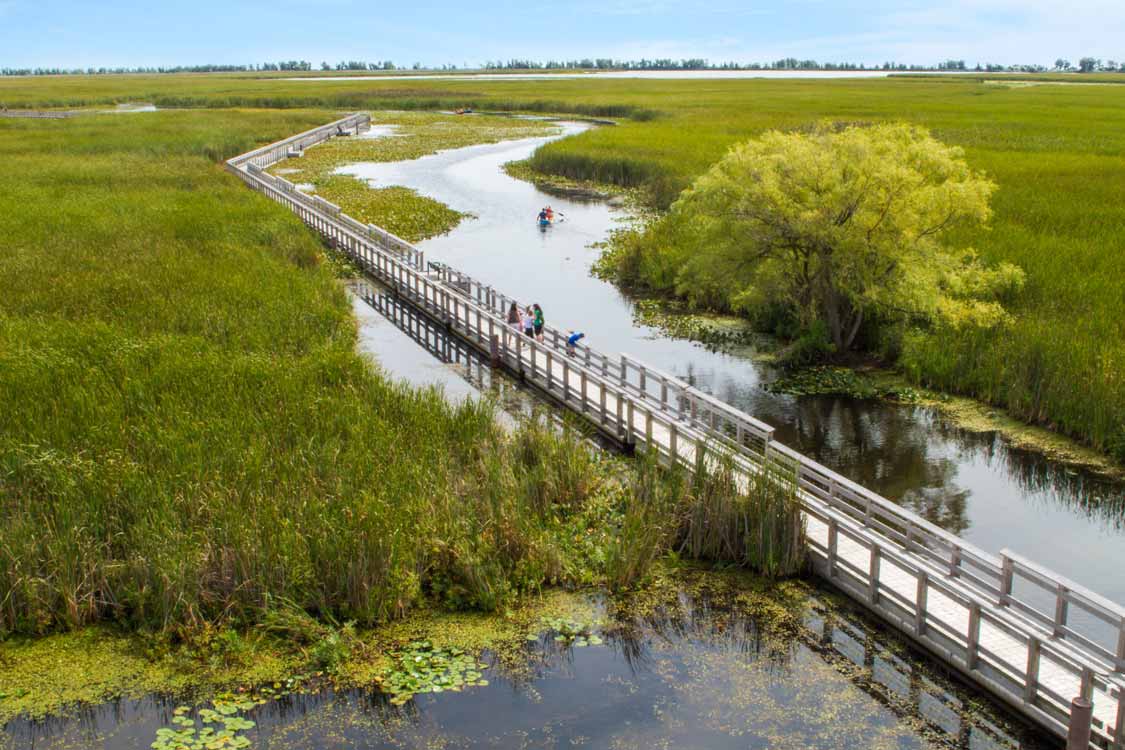
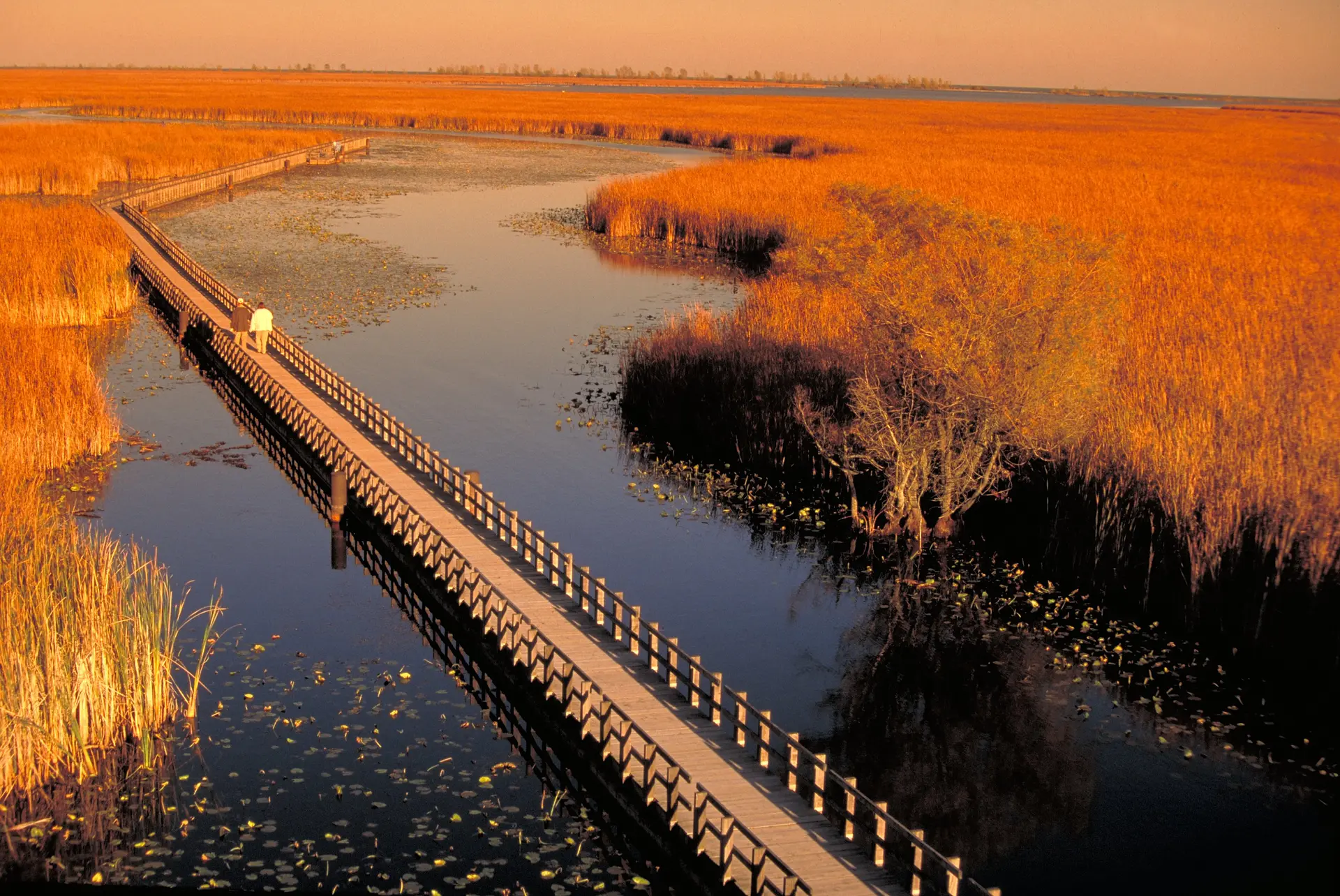
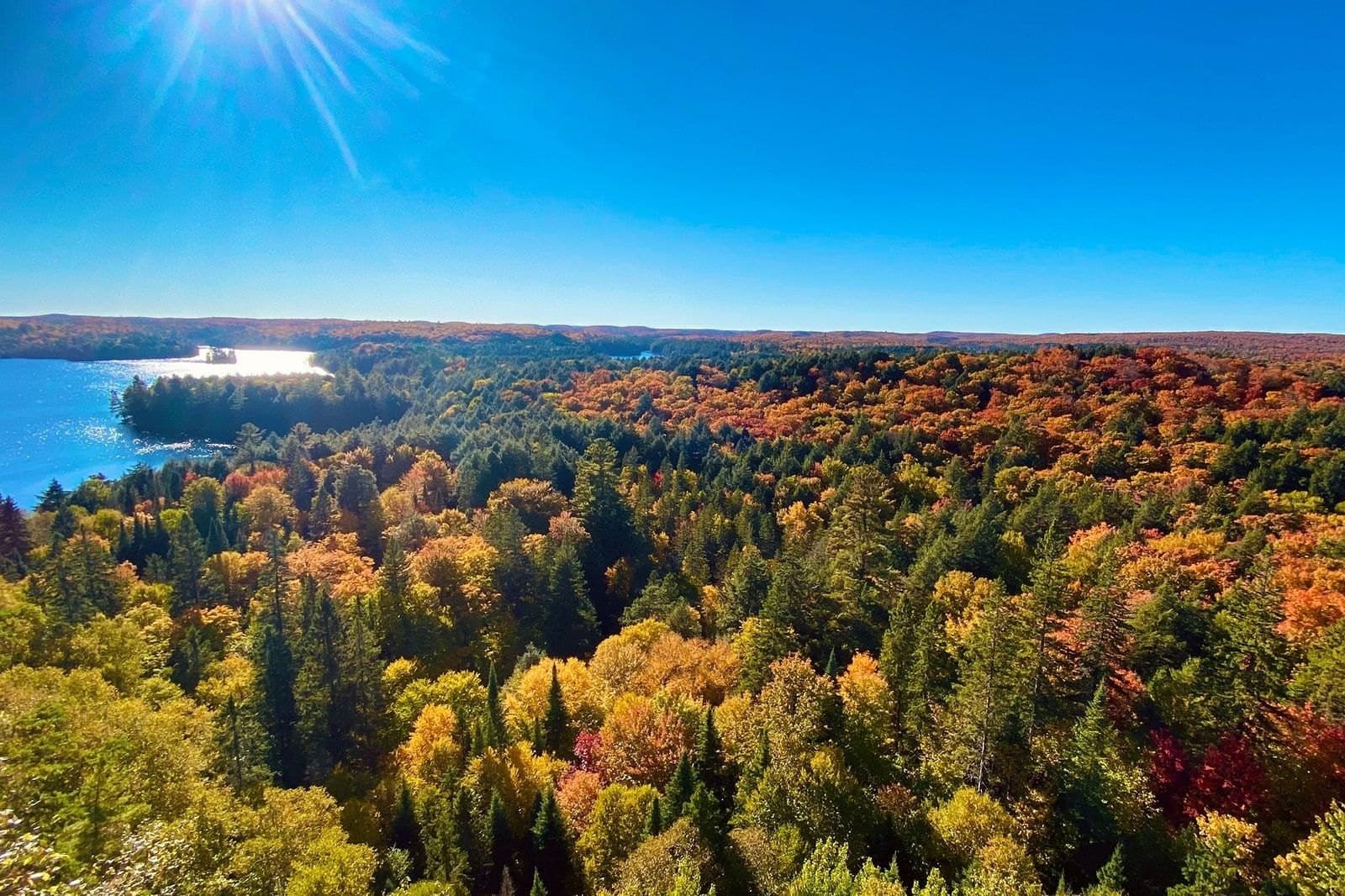
The park protects one of the last significant stands of Carolinian forest in Canada. Hackberry, sassafras, shagbark hickory, and towering tulip trees, all draped in wild grape and Virginia creeper. Two-thirds of the park is freshwater marsh, alive with painted turtles, great blue herons, and the occasional fox snake warming itself on a boardwalk railing.
But Point Pelee's real fame comes from what passes through it. The park sits at the convergence of two major migration flyways. In late May, warblers, orioles, tanagers, and flycatchers pour through the canopy in waves. In September, raptors ride the thermals overhead. And on the right day in late September, the trees at the tip drip with monarch butterflies staging for their flight to Mexico.
4.5 Hours from Toronto (We Drive, You Don't)
Point Pelee is a long day trip by car and has no overnight camping. That's why most people never go. Parkbus handles the highway, the navigation, and the parking (there is none to worry about). You board a comfortable coach bus in Toronto with reclining seats and AC, and step off at the edge of a Carolinian forest. We handle the road. You handle the binoculars.

What You'll Do All Day
- Walk to the Tip of Canada. A flat, easy trail leads to the southernmost point of mainland Canada. Stand there, look south across Lake Erie, and on a clear day, catch the haze of Ohio. Strange and satisfying, standing at the end of the country with sand between your toes.
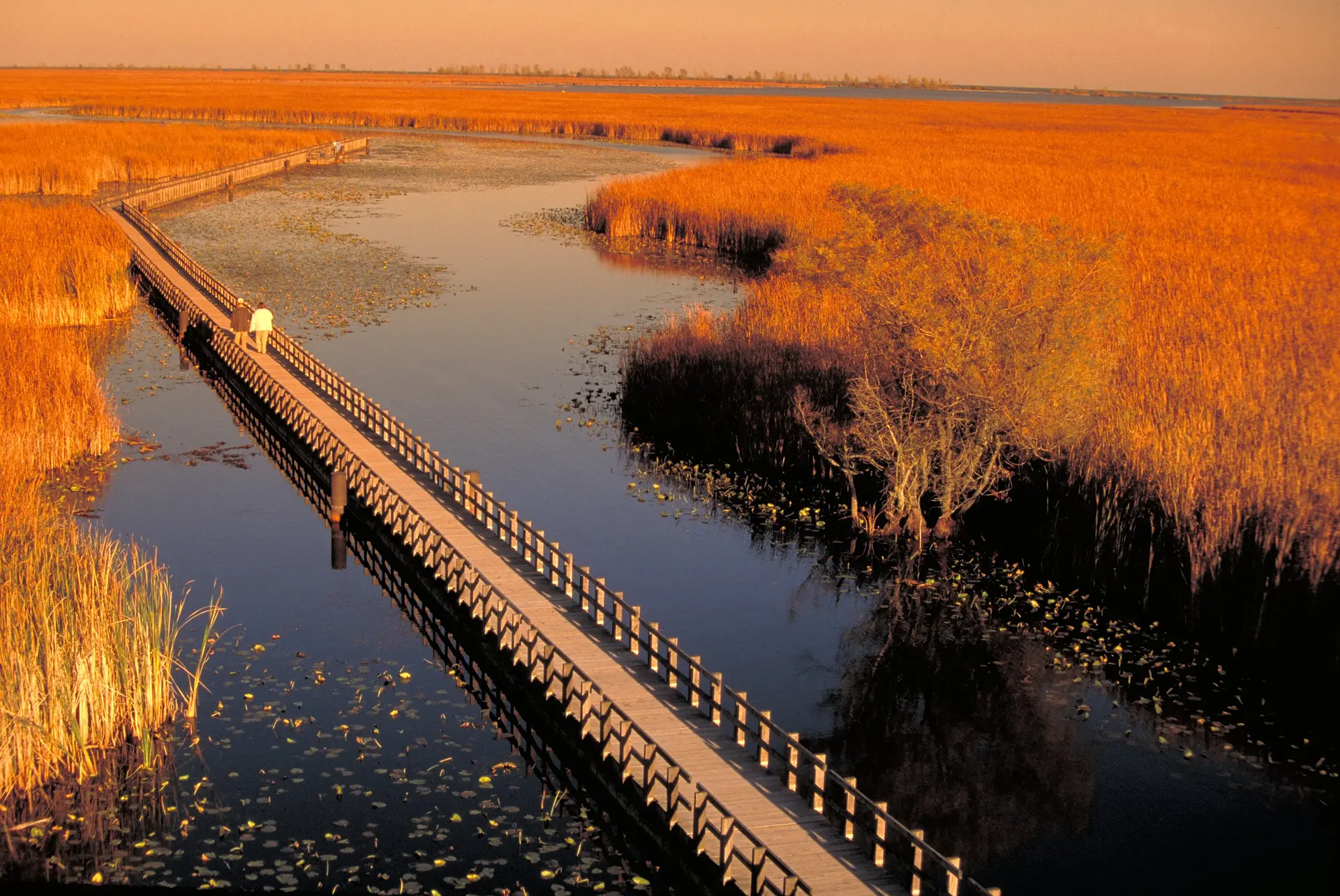
- Float Over a Marsh on the Boardwalk. A kilometre-long boardwalk carries you through cattails and lotus beds to an observation tower with sweeping views of wetland, forest, and lake. The light here in early morning and late afternoon is the kind photographers lose sleep over.
- Birding That Ruins You for Other Parks. Over 390 recorded species. In late May, the spring warbler migration turns the park into a living field guide. In September, it's raptors and songbirds staging for their journey south. Even if you don't consider yourself a birder, something shifts when a scarlet tanager lands three metres from your face.
- Monarch Butterflies by the Thousand (September). Monarchs gather at the tip before launching across Lake Erie en route to Mexico. Trees heavy with clustered wings. It is exactly as surreal as it sounds.
- A Beach Nobody Told You About. Long stretches of sandy Lake Erie shoreline, warm sand, thin crowds, and enough space to walk for ages without seeing another person. Pack a lunch and a towel.
- Do Very Little, Extremely Well. Short forest loops. Benches at exactly the right intervals. The Visitor Centre when your legs want a break but your brain doesn't. A book and a good spot. Not every day trip needs to be a workout.
Tickets:
- Adults: $100
- Student/Seniors: $90.00
- Children: $50.00
Pickup Locations
34 Asquith Avenue
Pick up at 34 Asquith Ave, just north of the Yonge and Bloor Subway stop. We recommend getting there 15 minutes early to make sure you have enough time for the bus.
Departure Time
7:30 AM
Return Time
11:30 PM
Point Pelee National Park
Point Pelee National Park, Canada’s southernmost point, is stunning in fall with vibrant colours and the famous Monarch butterfly migration. It’s a prime season for hiking, birdwatching, and soaking in the beauty of Lake Erie’s shores.
Estimated arrival
12:00 PM
Departure
6:30 PM

How long is the bus ride from Toronto?
About four to four and a half hours each way. The coach has reclining seats, AC, and storage. Most people nap on the way down and swap stories on the way back.
What kind of bus is it?
Full-sized coach. Reclining seats, air conditioning, overhead storage, plenty of legroom. Not a school bus situation.
Is this guided or self-guided?
Self-guided. Once you arrive, the park is yours. Trails are well-marked, the Visitor Centre has maps and displays, and the park shuttle (when running) connects trailheads to the tip.
Which dates are best for birdwatching?
The late May dates (May 18, 23, 30) hit the peak of spring warbler migration. Point Pelee is one of the premier birding spots in North America during this window, with over 390 recorded species. Even casual observers will spot things they've never seen.
When is monarch butterfly season?
The September dates (September 19 and 26) are timed for the fall monarch migration. Monarchs gather at the tip before crossing Lake Erie en route to Mexico. Late September is the sweet spot, though exact timing depends on weather.
What about a beach day?
June 6 offers the warmest weather potential with fewer crowds. Late May can also be lovely, though Lake Erie is still cool. September brings warm air but shorter days.
How far is the walk to the Tip?
About one kilometre each way from the shuttle drop-off on flat terrain. From the Visitor Centre (if the shuttle isn't running), it's roughly five kilometres each way. Very manageable for any fitness level.
Are there washrooms and food?
The Visitor Centre has washrooms and displays. There are picnic areas throughout the park and a seasonal cafe and gift shop. We recommend packing your own lunch, snacks, and water for maximum flexibility.
What should I bring?
Comfortable walking shoes (trails are flat but can be sandy or muddy), a light jacket (Lake Erie breezes are real, even in May), sunscreen, snacks, water, and binoculars or a camera if you have them. In September, layers are smart as temperatures swing through the day.
Is Point Pelee accessible?
The Marsh Boardwalk is wheelchair accessible. The road to the tip is paved, and the park shuttle provides access to key areas when operating. Some beach and forest trails are sandy or uneven. Check with Parks Canada for current accessibility details.
Is there a park entry fee?
Yes. Point Pelee is a Parks Canada site and entry fees are not included in the Parkbus ticket. You can buy a day pass at the gate or use a Parks Canada Discovery Pass. Current fees are on the Parks Canada website.
What if it rains?
The forest canopy provides natural shelter on many trails, the Visitor Centre is a great indoor option, and rain can actually improve birdwatching (birds are more active in the understory during and after rain). Pack a rain jacket and lean into it.
Can I come solo?
Absolutely. A significant number of Parkbus travellers come solo, and the shared experience of the ride and the park creates easy, natural connections. You'll have company if you want it and space if you don't.
How much time will I have in the park?
Typically five to six hours. Enough to walk to the tip, explore the Marsh Boardwalk, have lunch, and wander a few forest trails. You won't be bored, and you won't feel rushed.